
Voluntary sector organisations operate with tight budgets, limited staff, and endless responsibilities. Training courses for voluntary sector staff often feel like a luxury rather than a necessity when funds barely cover salaries and service delivery.
Yet, staff development directly affects your organisation’s impact, compliance, and survival. Untrained teams make costly mistakes, struggle with grant applications, and fail to meet regulatory requirements.
This guide covers the 10 most valuable training courses for voluntary sector staff, as well as practical steps to access government funding, grants, and subsidised programmes..
Why Staff Development Matters for Voluntary Organisations
Charities face scrutiny from regulators, funders, and the communities they serve. Professional competence isn’t optional anymore.
Trustees want assurance that staff handle finances correctly, funders demand evidence of measurable impact and service users expect safe, effective support.
Training courses for employees in the volunteer sector address these expectations while building organisational resilience. Skilled teams write stronger grant applications, manage risk more effectively, and deliver better services.
The investment pays back through improved funding success and operational efficiency.
Benefits of Staff Development vs Risks of Inadequate Training
| Benefit of Professional Development | Risk of Untrained Staff | Impact on Organisation |
| Stronger grant applications | Rejected funding bids | Revenue loss, programme cuts |
| Better financial management | Compliance failures | Regulatory action, loss of trust |
| Effective safeguarding | Serious case reviews | Reputational damage, legal costs |
| High-quality service delivery | Poor outcomes for service users | Loss of contracts, community trust |
| Skilled volunteer management | High volunteer turnover | Programme instability, extra costs |
1. Fundraising and Grant Applications
Every charity needs income. Training courses for staff in the voluntary fundraising sector teach practical skills that keep organisations solvent.
These courses cover grant research, application writing, donor cultivation, and compliance with funding requirements. Staff learn to craft compelling cases for support and evidence impact and build relationships with funders.
The National Council of Volunteer Organisations (NCVO) offers comprehensive fundraising courses tailored to reality in the charity sector. Directory of Social Change provides specialist training on major donor engagement and trust fundraising.
What You Learn:
- Research appropriate funding opportunities
- Write applications that meet funder priorities
- Budget accurately for multi-year projects
- Report impact in ways funders value
- Build long-term funder relationships
Prices range from free webinars to £300 for full-day programmes. Many regional voluntary sector support organisations offer subsidised versions.
2. Charity Governance and Trustee Training
Poor governance causes charity failures. Trustees need specific knowledge about their legal duties, financial oversight, and strategic leadership.
These training courses for voluntary sector staff prepare trustees and senior managers to meet Charity Commission requirements. Content covers trustee responsibilities, risk management, conflict of interest, and decision-making processes.
The NCVO’s governance courses attract trustees from organisations of all sizes. The Small Charities Coalition provides accessible training for volunteer-led groups with limited resources.
Governance failures lead to regulatory intervention, loss of charity status, and damages that can permanently close organisations. This training prevents those outcomes.
3. Safeguarding in Charities
Safeguarding sits at the heart of voluntary sector work. Whether you support children, vulnerable adults, or any at-risk groups, staff must understand protection duties.
Training includes recognising abuse signs, reporting procedures, ensuring safe recruitment, and creating safeguarding cultures. Courses meet Charity Commission requirements and align with local safeguarding board expectations.
For those exploring how online learning makes professional development accessible for everyone, safeguarding courses now offer flexible online formats alongside traditional classroom delivery.
Essential Safeguarding Topics for Charity Staff
| Topic | Why It Matters | Who Needs It |
| Recognising abuse | Early identification prevents harm | All staff, volunteers, trustees |
| Reporting procedures | Proper escalation saves lives | Everyone in organisation |
| Safer recruitment | Prevents unsuitable people joining | HR staff, managers, trustees |
| Record-keeping | Protects organisation legally | Administrative staff, managers |
| Online safety | Digital risks require new responses | Staff working with young people |
Costs vary, from free local authority courses to £150 for specialist programmes. Many safeguarding partnerships offer free training to voluntary organisations in their areas.
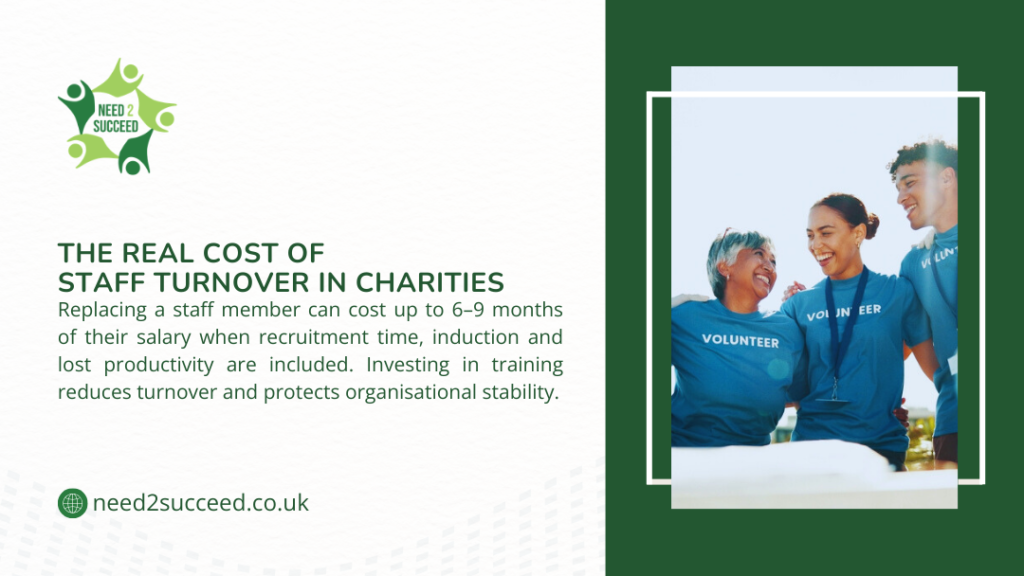
4. Project Management for Nonprofits
Charities run complex projects with multiple stakeholders, tight budgets, and ambitious goals. Project management training helps staff deliver on time, within budget, and to specification.
These training courses for voluntary sector staff teach planning, resource allocation, risk management, and evaluation. Staff learn to use practical tools that work in resource-constrained environments.
NCVO provides project management courses designed specifically for charity contexts. These address real challenges like volunteer coordination, multi-agency partnership, and outcome measurement.
Good project management means services actually happen as promised. This matters enormously when funders measure success by delivering outcomes rather than good intentions.
5. Financial Management and Charity Accounting
Money management plays a crucial role in the success of charities. Finance training equips non-finance staff to understand budgets, cash flow, and financial reporting.
Courses cover charity-specific accounting rules, budget creation, financial controls, and reporting to trustees. Advanced programmes address fund accounting, restricted incomes, and audit preparation.
The course levels range from basics for trustees to detailed technical training for finance officers. Pricing starts with free webinars and goes up to £500 for comprehensive programmes.
Financial Skills Progression for Charity Staff
| Skill Level | Who Needs It | What They Learn |
| Foundation | Trustees, volunteers | Read financial reports, budget basics |
| Intermediate | Managers, coordinators | Create budgets, monitor spending |
| Advanced | Finance staff | Fund accounting, audit preparation |
| Specialist | Senior finance roles | Complex reporting, compliance |
Sector bodies like NCVO offer charity finance courses that recognise the unique challenges volunteer organisations face. Commercial providers rarely understand restricted funds, designated reserves, or charitable accounting requirements.
6. Volunteer Recruitment and Management
Volunteers power most charities. Managing them well requires specific skills that differ from staff management.
Training courses for staff in the voluntary sector cover strategies for recruiting volunteers, role design, induction, support, and recognition. Staff learn legal distinctions between volunteers and employees, insurance requirements, and best practices in volunteer engagement.
Volunteer Scotland and NCVO both provide excellent volunteer management courses. These address practical challenges like volunteer retention, difficult conversations, and matching people to suitable roles.
Effective volunteer management reduces turnover, improves service quality, and creates positive experiences that generate word-of-mouth recruitment. The return on investment can be substantial.
7. Equality, Diversity and Inclusion
EDI training helps organisations serve diverse communities fairly and in accordance with the Equality Act.
Courses explore unconscious bias, accessible service design, and inclusive governance. Staff learn practical approaches to remove barriers that prevent people from accessing support.
This training matters, particularly for organisations that serve marginalised groups. It helps teams identify when policies or practices inadvertently exclude people they aim to help.
NCVO and specialist EDI consultancies offer courses from awareness-raising through to strategic implementation. Costs range from £100 for half-day awareness sessions to £600 for strategic programming.
8. Data Protection and GDPR Compliance
Charities hold sensitive personal information about service users, donors, and staff. Data protection training prevents breaches that damage trust and trigger ICO penalties.
These training courses for voluntary sector staff explain GDPR requirements in plain language, covering lawful bases for processing, consent, data security, and subject rights.
The Information Commissioner’s Office provides free resources and webinars. Commercial providers charge £150–£300 for comprehensive courses tailored to charitable contexts.
For people interested in adult education and changing careers, data protection courses offer portable skills that are applicable across sectors, not just voluntary organisations.
9. Monitoring, Evaluation and Impact Measurement
Funders demand evidence of impact. Training in evaluation helps staff design systems that capture meaningful outcomes without excessive administrative burden.
Courses teach logic models, outcome measurement, data collection methods, and compelling impact reporting. Staff learn to balance funder requirements with practical delivery realities.
The Evaluation Support Scotland and similar bodies provide excellent practical training. Prices range from free webinars to £400 for comprehensive programmes.
Impact Measurement Skills at Different Levels
| Level | Skills Developed | Tools & Techniques Learned | Suitable For |
| Basic | Define outcomes, collect data | Simple surveys, case studies | Frontline staff, volunteers |
| Intermediate | Design evaluation frameworks | Logic models, indicators | Project managers, coordinators |
| Advanced | Analyse data, report findings | Statistical analysis, dashboards | Senior staff, evaluators |
Good evaluation does more than satisfy funders. It helps organisations learn what works, adapt their approaches, and continually improve their services.
10. Leadership and Strategic Management
Senior staff and trustees need strategic thinking skills to guide organisations through complex challenges.
Leadership training for voluntary sector contexts addresses specific challenges like managing with limited resources, board-staff relationships, and stakeholder engagement. Content covers vision-setting, change management, and strategic planning.
Cass Business School offers a respected MSc in Voluntary Sector Management. Shorter programmes from NCVO cost £300-£800 for one- or two-day courses.
These programmes recognise that charity leadership differs from private sector management. Values, mission, and social impact create unique strategic considerations that commercial leadership training doesn’t address.
Frequently Asked Questions
Can small charities with only volunteers access training funding?
Many funding schemes explicitly include volunteer-led organisations. The Adult Education Budget funds individuals, not organisations, so volunteers can access courses if they meet personal eligibility criteria.
Do online courses receive the same funding as classroom training?
Funding eligibility depends on the qualification and provider, not the delivery method. Ofqual-regulated online courses from approved providers qualify for Adult Education Budget funding identically to face-to-face delivery.
What’s the quickest way to find funded training in my region?
Contact your local Council for Voluntary Service or county voluntary action. These infrastructure bodies maintain lists for subsidised training and can advise on eligibility. They often negotiate discounted rates for member organisations.
Are there specific funds for training paid staff versus volunteers?
Most training funds don’t distinguish between paid staff and volunteers. Eligibility focuses on individual circumstances (age, existing qualifications) or organisational characteristics (size, location, cause area) rather than employment status.
How do we choose which staff to train first with limited funding?
Prioritise training that addresses compliance requirements (safeguarding, data protection), generates income (fundraising), or prevents costly errors (financial management). Build skills among staff who will cascade knowledge to colleagues, maximising the impact of limited training investments.
Build Your Charity’s Capability Through Strategic Training
Need2Succeed understands the resource constraints voluntary organisations face. Our flexible, accredited qualifications support charities to develop skilled, confident staff who deliver better outcomes.
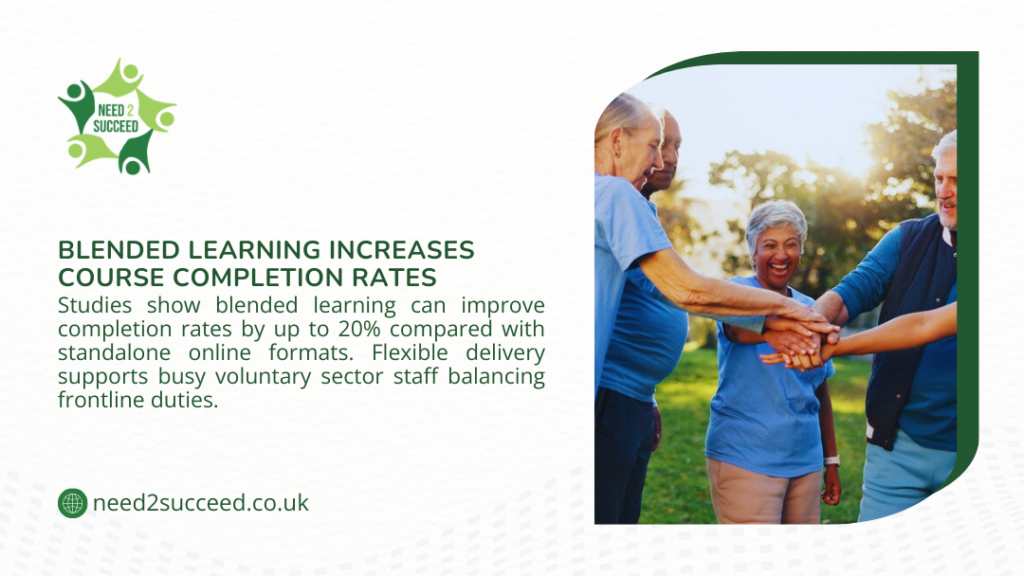
We offer blended learning that fits around service delivery schedules. Our programmes in youth work, social prescribing, health and social care, and business administration address skills gaps common across the voluntary sector.
Whether you need one staff member trained or want to upskill an entire team, we provide pathways that work for charities. Our personal support helps busy charity workers complete their qualifications even when operational pressures mount.
Contact Need2Succeed today to discuss how our training courses for voluntary sector staff can strengthen your organisation’s capability and impact.