
Professional development used to follow one path: take time off work, travel to a course, and hope the schedule fits around your life. For millions of adults in the UK, that path was simply not available.
How online learning makes professional development accessible for everyone is a question worth exploring in depth.
The answer has changed what career progression looks like for working parents, people in rural areas, and professionals without the flexibility to step away from paid work.
What Accessible Professional Development Really Means Today
Accessibility in professional development is not just about being able to study from home. It is about removing the structural barriers that have historically kept certain groups out of career progression entirely.
As adult learning continues to transform lives across the UK, online formats are at the centre of that shift.
Time, cost, geography, and life stage all determine whether a person can access training. Online learning addresses each of these dimensions in ways that traditional classroom formats cannot.
| Accessibility Factor | Traditional Format | Online Learning |
| Time | Fixed timetables, often during working hours | Study evenings, weekends, or in short sessions |
| Cost | Course fees plus travel, childcare, lost wages | Course fees only; no commute or childcare costs |
| Location | Must be within reach of a physical centre | Accessible from anywhere with an internet connection |
| Entry requirements | Sometimes academic qualifications required | Many programmes assess life and work experience |
| Flexibility | Low; attendance usually compulsory | High; self-paced or asynchronous in many cases |
Time Accessibility: Learning Around Your Schedule
Most adults who want to develop professionally are already working. Taking a qualification should not require them to choose between their income and their career progress.
Online learning removes that conflict. Modules can be completed in the early morning, during a lunch break, or after the children are in bed. Studying after work without sacrificing income is the standard model for well-designed online programmes.
Financial Accessibility: Lower Costs, Higher Opportunity
For in-person training, the true cost extends beyond the course fee including travel, parking, childcare, and time away from paid work. For many adults, those indirect costs make traditional professional development financially out of reach.
Online formats cut most of those costs entirely. The course fee is often the only expense. Combined with government adult education funding available to eligible learners, the financial barrier to gaining a nationally recognised qualification is lower than it has ever been.
Geographic Accessibility: Opportunities Without Relocation
Your postcode no longer limits your career. Before online learning became mainstream, people in rural areas or communities without further education centres had significantly fewer options for professional development.
For example, a learner in a small town in Wales can now access the same accredited youth work qualification as someone in central London.
Distance from a physical campus is no longer a factor in career progression.
How Online Learning Removes the Biggest Barriers to Career Growth
Adults face barriers to professional development that younger learners often do not. Work commitments, caring responsibilities, financial pressure, and gaps in formal education all create friction. Online learning addresses each one directly.
| Barrier | How Online Learning Removes It |
| Full-time work prevents attendance at daytime courses | Flexible, asynchronous study fits around any work schedule |
| Childcare or caring responsibilities limit availability | Study from home eliminates the need to travel or arrange external care |
| Distance from training centres | Location is irrelevant; all content is accessible online |
| Lack of traditional academic qualifications | Many programmes accept work experience and prior learning as entry criteria |
| Cost of taking time off work to study | No lost wages; online study happens outside paid hours |
Balancing Work, Family, and Study
The most common objection from adults who want to upskill is time. They are not wrong to raise it. Adding study to a schedule already full of work and family commitments requires genuine adjustment.
What online learning provides is control, so you decide when to study, for how long, and at what pace.
For example, a working parent who has 45 minutes from Monday-Friday and three hours on a Sunday morning can build a qualification around that reality rather than forcing life around a fixed timetable.
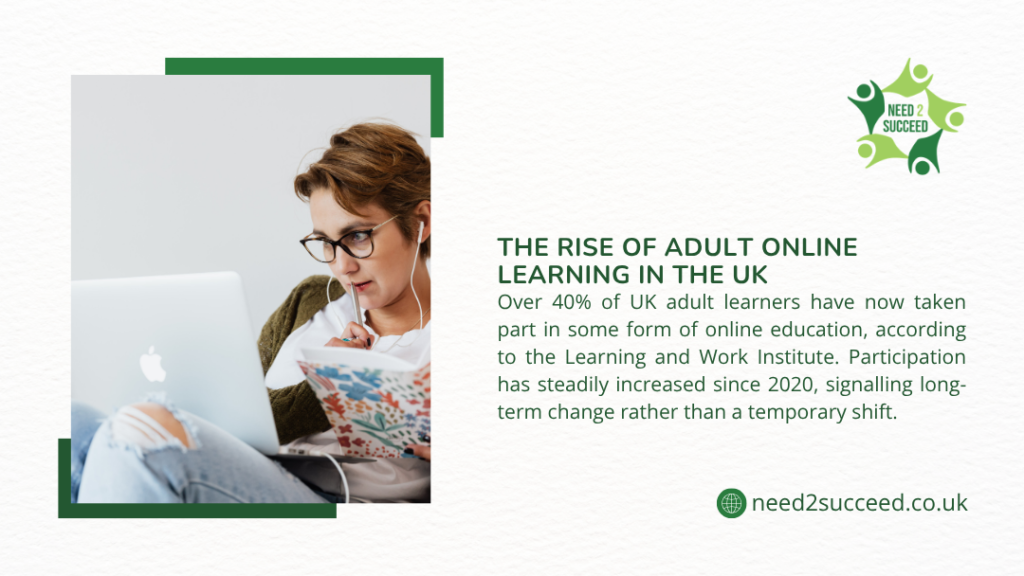
Entry Without Traditional Academic Backgrounds
Many adults left school without the qualifications traditionally expected for professional training. Online vocational programmes, particularly at Level 2 and Level 3, are designed to assess applicants on work history, motivation, and relevant experience rather than academic results.
This matters enormously. It opens professional development pathways to people who were previously excluded not because of ability, but because of circumstances during earlier education.
Continuous Learning in a Fast-Changing Job Market
Roles in health and social care, youth work, and community services are evolving. Employer expectations are rising. CPD has shifted from an optional extra to a professional requirement in many sectors.
Online short courses and CPD programmes allow professionals to stay current without taking extended time out of work. Training courses for voluntary sector staff reflect this demand directly, offering flexible formats that allow organisations to upskill teams without operational disruption.
Why Online Learning Works for Different Types of Professionals
Online professional development is not a one-size-fits-all solution. Its flexibility makes it suitable for very different learner profiles, each with distinct motivations and challenges.
| Learner Type | Primary Benefit | Example Outcome |
| Career changer seeking a new direction | Gain recognised credentials without leaving current role | Retail manager completes Level 3 Youth Work qualification and transitions to community sector |
| Working professional pursuing advancement | Add specialist qualifications without career break | Healthcare assistant gains Level 3 Social Prescribing certificate and moves into link worker role |
| Parent returning to the workforce | Study flexibly around childcare hours | Parent completes Level 2 Health and Social Care while children are at school |
| Mature learner re-entering education | Build confidence through practical, portfolio-based assessment | Adult at 50 gains first formal qualification and secures community development role |
| Remote worker or rural learner | Access courses not available locally | Learner outside London gains same accredited qualification as city-based peers |
Career Changers Seeking a New Direction
Adults who want to change sectors face a specific challenge: they need credentials in a new field but cannot afford to stop earning while they train. Online study makes the transition possible alongside existing employment.
The voluntary and community sector, youth work, and health and social care roles all have clear qualification pathways that can be completed online or through blended formats. Someone leaving retail or office work can build the credentials they need without a full career break.
Working Professionals Pursuing Advancement
Not every professional development goal involves a sector change. Many adults want to progress within their current field, take on senior responsibilities, or specialise in a particular area of practice.
Online qualifications at Level 3 and Level 4 provide the formal credentials that support those moves. Completing a qualification alongside existing work also demonstrates initiative and self-direction to employers, which carries its own professional value.
Mature Learners Returning to Education
Adults who have been out of formal education for a decade or more often carry anxiety about academic ability. Online vocational programmes typically use portfolio-based and work-evidence assessment rather than traditional exams, which suits mature learners far better.
Starting at Level 2 builds confidence. Completing one qualification and then progressing to Level 3 creates a structured pathway that feels manageable rather than overwhelming.
Career Benefits: How Online Learning Supports Real Professional Advancement
A qualification is only as valuable as the career outcome it supports. Online professional development delivers most when it is tied to clear employment pathways and real employer demand.
| Skills Gained Online | Career Impact | Relevant Roles |
| Youth work practice and safeguarding | Direct entry into youth work and community roles | Youth worker, community support worker |
| Social prescribing and person-centred support | Qualification for link worker positions | Social prescribing link worker, wellbeing coordinator |
| Health and social care competencies | Progression within care settings | Support worker, healthcare assistant, team leader |
| Community development and leadership | Senior roles in voluntary and public sector | Project coordinator, community development officer |
| Business administration and workforce skills | Promotion or transition into administrative roles | Office manager, HR coordinator, team supervisor |
Building Job-Ready Skills Employers Need
Employers in the voluntary sector, local government, and health and social care organisations consistently report skills gaps. Accredited online qualifications address those gaps directly with content designed around real job requirements, not theoretical frameworks.
The demand for skilled practitioners is growing across community-based professions. Understanding the real impact of youth workers in UK communities makes clear why qualified candidates are sought after and why relevant credentials genuinely open doors.
Demonstrating Initiative and Adaptability
Completing a professional qualification while working signals something beyond the credential itself. It tells employers that the individual can self-manage, prioritise development, and follow through on long-term commitments.
These qualities are difficult to demonstrate on a CV otherwise. An online qualification gained alongside full-time work is evidence of both capability and character.
Opening Doors to New Roles and Industries
Career mobility depends on recognised credentials. Without them, adults with years of relevant experience are frequently overlooked in favour of formally qualified candidates.
Online qualifications from accredited providers close that gap. They give experienced practitioners the formal credentials that allow employers to consider them for roles they could not previously apply for.
Common Concerns About Online Learning and the Reality
Doubts about online qualifications are understandable. They deserve honest answers rather than dismissal.
| Common Concern | The Reality |
| Employers do not respect online qualifications | Employers care about the awarding body and qualification level, not the delivery format. Ofqual-regulated qualifications carry the same weight online as in-person. |
| Online study is isolating and unsupported | Reputable providers offer regular tutor contact, peer study groups, and mentoring. Support is built into the programme structure. |
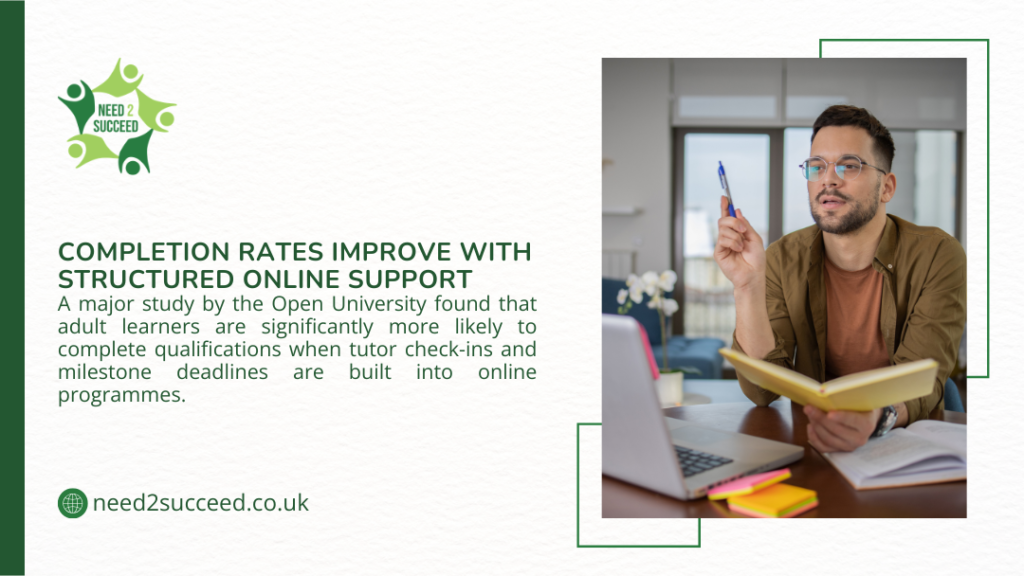
| I will not have the discipline to finish | Structured deadlines, regular check-ins, and modular progression give online study the accountability that makes completion realistic. |
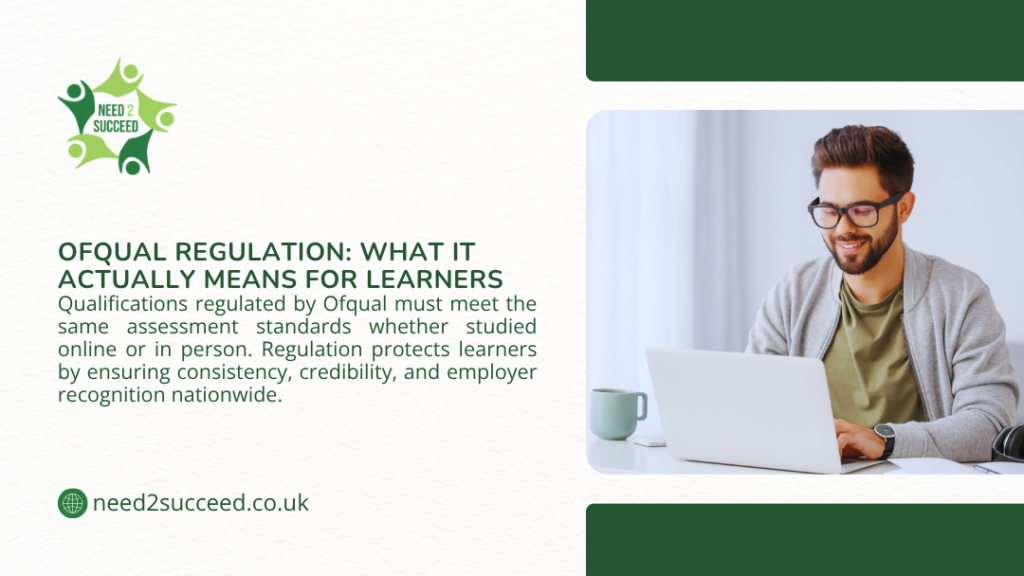
| Online courses are lower quality than classroom training | Ofqual regulation applies to the qualification standard, not the delivery format. The assessment criteria are the same regardless of how you study. |
| I am not technical enough for online learning | Most online learning platforms are designed for non-technical users. Providers offer digital literacy support where needed. |
Will Employers Respect Online Qualifications?
The short answer is yes, when the qualification is accredited by a recognised awarding body and regulated by Ofqual.
The Learning and Work Institute has noted that employer attitudes toward online credentials have shifted significantly, with skills and accreditation level now the primary concern rather than delivery format.
The credential on the certificate is what matters. How you studied for it is secondary.
Staying Motivated Without a Classroom
Motivation in online study comes from structure, not setting. Programmes with clear module deadlines, regular tutor contact, and visible progression milestones support completion far better than those with no external accountability.
Choosing a provider that builds in support, rather than simply providing access to materials, makes a significant difference to whether learners finish what they start.
Lack of Face-to-Face Interaction
Blended learning formats offer a middle path. Most of the coursework is completed independently online, while periodic in-person or live virtual sessions maintain the human connection that supports motivation and community.
For many learners, online forums, peer group chats, and regular tutor calls provide more consistent contact than they would receive attending a classroom once a week.
How to Choose an Online Programme That Truly Supports Your Career
Not all online programmes deliver the same quality or outcomes. Choosing the right one matters as much as the decision to study at all.
| What to Look For | What to Avoid | Why It Matters |
| Ofqual-regulated awarding body | Unaccredited or self-certified courses | Ensures employer and sector recognition |
| Named tutor or mentor support | Self-service only with no human contact | Drives completion rates and learning quality |
| Clear qualification level (Level 2, 3, or 4) | Vague outcome descriptions | Tells you and employers exactly what the credential represents |
| Flexible but structured deadlines | No deadlines at all | Balances freedom with the accountability needed to finish |
| Transparent costs and outcomes | Hidden fees or unclear job pathway | Lets you make an informed decision before enrolling |
Check Accreditation and Recognition
Before enrolling in any online professional development programme, confirm the qualification is regulated by Ofqual and awarded by a recognised body. This single check filters out the vast majority of low-quality or misleading offerings.
The Register of Regulated Qualifications (RQF) is publicly searchable and free to use. If a qualification does not appear there, it is not regulated.
Look for Structured Support Systems
The best online programmes do not just provide content. They provide people. Named tutors, scheduled check-ins, accessible mentors, and responsive support teams are what make the difference between completing a qualification and abandoning it.
Programmes that incorporate social prescribing principles into their learner support model reflect this, addressing the whole person rather than delivering content in isolation from context.
Evaluate Flexibility vs Accountability
Full self-pacing sounds appealing but often leads to procrastination. The best online programmes offer flexibility within a structure: study when you choose, but with clear milestones, submission windows, and tutor input at regular intervals.
Ask any provider about their completion rates before enrolling. A provider confident in their programme quality will share this information readily.
FAQs: Online Learning and Professional Development
Is online learning as effective as classroom training for professional development?
Yes, when the programme is accredited and well-structured. Research published by the Learning and Work Institute supports the effectiveness of online and blended formats for adult professional development, particularly when structured support is built into the course rather than left to the learner alone.
Do employers recognise online qualifications?
Employers recognise qualifications by awarding body and level, not delivery format. An Ofqual-regulated Level 3 qualification gained online carries the same employer recognition as the same qualification gained in a classroom. Sector-specific employers in youth work, health and social care, and community services regularly accept online-achieved credentials.
Can I study online while working full time?
Yes, it is 100% possible to study online while working a full time job. Flexible pacing, asynchronous content, and structured deadlines make full-time employment and online study compatible for most learners. Most programmes recommend setting aside 5 to 8 hours per week, which can be spread across evenings and weekends.
Is online professional development cheaper than traditional education?
Typically yes. The absence of travel, childcare, and time-off-work costs makes the total financial commitment lower. Government adult education funding also remains available for eligible learners studying accredited online qualifications, which can reduce or eliminate the course fee entirely.
What careers benefit most from online training?
Online professional development is particularly well-suited to roles in youth work, health and social care, social prescribing, community development, business administration, and the voluntary sector. These fields have clear qualification pathways at Level 2 to Level 4 that can be completed through accredited online programmes.
Key Takeaway
How online learning makes professional development accessible for everyone is not a claim that needs defending. It is a reality for the millions of adults in the UK who could not previously access career development due to time, cost, geography, or life stage.
The qualification you complete online, from an accredited provider with proper support, is as valuable as any classroom credential.
What matters is choosing a programme regulated by Ofqual, delivered by a provider that invests in learner support, and aligned with the career outcome you are working toward.
Start Your Professional Development with Need 2 Succeed
Need 2 Succeed offers nationally accredited qualifications in youth work, health and social care, social prescribing, and business administration, all designed for adults who need to study around work and family commitments.
Our programmes are delivered online, in person, and through blended formats from our base at LSBU Campus in Croydon, with learners across the UK accessing our courses digitally.
Every learner receives personalised mentoring and structured tutor support throughout their qualification journey.Contact Need 2 Succeed today to find out which programme fits your career goals and how we can support you to complete it.