
A recent study from University College London found something quite impressive. Between 2019 and 2023, there were millions of GP visits in England where doctors discussed social prescribing with patients, leading to people being referred to community support services.
This guide elucidates the concept of social prescribing, its practical implementation, and the reasons behind its rapid growth in the UK.
What Is Social Prescribing?
Social prescribing is a way for doctors to help patients with problems that medicine alone can’t fix. This includes issues such as loneliness, financial concerns, and insufficient physical activity in daily life.
Instead of only giving pills, GPs can now connect people to local groups and services that tackle the real causes of health problems.
How Social Prescribing Actually Works
When you visit your GP with health worries, they might spot that your problems come from things outside the medical world. You might feel low because you’re isolated at home, your back pain might get worse because you never exercise, and these patterns affect your overall health.
Social prescribing lets your doctor refer you to a link worker; this person sits down with you and has a proper conversation about what’s going on in your life. They ask what matters to you and what you’d like to change.
The link worker then connects you with local activities and services that can help. You’re not forced to do anything; the whole approach focuses on what you want and what might actually work for your situation.
The Role Link Workers Have
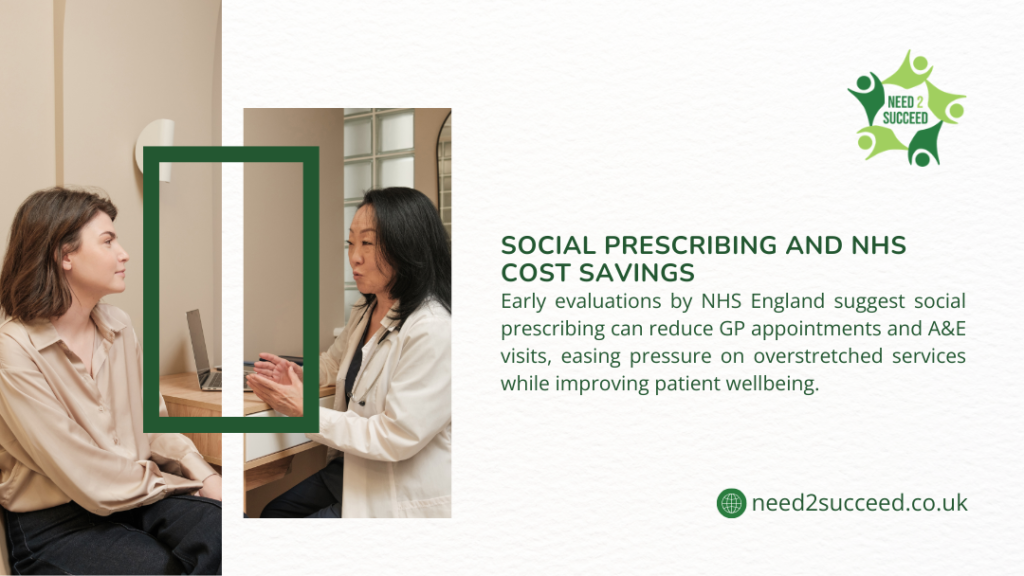
Link workers are the heart of social prescribing; they work in GP surgeries as part of the primary care team. Over 3,600 of them now work across England.
Their job is quite different from other healthcare roles; they spend time listening without rushing you out after ten minutes. They help you make a plan based on your own goals and interests.
A recent survey from the National Academy for Social Prescribing showed that 98% of link workers believe their work helps the people they support; that’s a huge validation and shows how valuable the role has become.
| Link Worker Tasks | What They Do |
| Initial chat | Listen to your concerns and life situation |
| Build a plan | Work out what services might help you |
| Make connections | Introduce you to local groups and activities |
| Follow up | Check how things are going after a few weeks |
| Support groups | Help community organisations stay active |
What Services Can You Access Through Social Prescribing?
The beauty of social prescribing is how many different services you can access; it depends on what’s available in your local area and what you actually need.
Arts and creative activities are popular options. Painting classes, singing groups, drama clubs and dance sessions all count. These activities help people express themselves and meet others with similar interests.
Physical activities matter too. Walking groups, swimming sessions, gardening clubs and sports teams give people a reason to move their bodies regularly; green social prescribing focuses specifically on outdoor activities like conservation work and nature walks.
Practical support services help with life problems that affect health. Debt advice, housing support, benefit guidance, and employment assistance all fall under social prescribing; these tackle the root causes of stress that make people unwell.
| Activity Type | Common Examples | Main Benefits |
| Creative Arts | Painting, singing, drama, crafts | Self-expression, confidence, social connections |
| Physical Activities | Walking groups, swimming, gardening, sports | Fitness, energy, mental health improvement |
| Practical Support | Debt advice, housing help, benefits guidance | Reduced stress, financial stability |
| Social Groups | Lunch clubs, befriending, community cafés | Combat loneliness, sense of belonging |
| Green Activities | Nature walks, conservation, allotments | Mental wellbeing, outdoor time, purpose |
Social connections combat isolation. Befriending schemes match people who feel lonely with volunteers, and community cafes and lunch clubs give people somewhere to go and chat with others.
Who Benefits Most From Social Prescribing?
Nearly one in five GP appointments deal with non-medical issues like loneliness, relationship problems, or money stress. Social prescribing gives doctors a proper way to help with these situations.
People with long-term health problems find social prescribing particularly useful; diabetes was one of the most common conditions studied in recent research. The NHS originally set a target for people being referred to social prescribing; the actual numbers went well above that target.
Anyone can access social prescribing through their GP. The service caters to a wide range of individuals, including teenagers, working adults, retirees, and families, tailoring its services to meet individual needs instead of adopting a uniform approach.
Some groups that benefit include people who feel socially isolated, those dealing with mild mental health problems, patients with multiple health conditions, and people facing housing or financial difficulties.
Understanding the impact of youth workers shows how community-based support creates lasting change in people’s lives.
| Patient Situation | How Social Prescribing Helps |
| Feeling lonely | Connect with befriending services and social groups |
| Money worries | Access debt advice and benefits support |
| Poor mental health | Join wellbeing activities and peer support |
| Physical inactivity | Start exercise groups or outdoor activities |
| Long-term illness | Find support groups and practical help |
Different Routes Into Social Prescribing
Most individuals receive referrals from their General Practitioner (GP), but this isn’t the sole method. Nurses, pharmacists, hospital staff and social workers can all refer people to LinkWorkers.
Some areas actively encourage self-referral; you can contact your local link worker service directly without going through a doctor first. Check your GP surgery website or ring the practice to find out if this option exists near you.
Community organisations sometimes refer people, too. Charities, housing associations, job centres and even fire services can connect people with social prescribing support; this wider net catches people who might not visit their doctor regularly.
The process stays simple no matter who you refer to. You contact a link worker who sets up a meeting or call to discuss your situation and possible solutions.
Training and Qualifications for Link Workers
Understanding what social prescribing is includes knowing about the people who deliver it. Link workers come from all sorts of backgrounds; there are no strict entry requirements for the role. Your life experience, personal qualities, and values matter more than your formal qualifications.
Some employers ask for basic maths and English skills plus some IT ability. A few want Level 3 qualifications or higher, but many organisations focus on whether they have the right approach rather than certifications.
Once in the job, you need to complete specific training. NHS England provides an online learning programme with twelve modules; these cover everything from the basics of the link worker role to how you develop support plans with people.
The Level 3 Qualification in Social Prescribing is recognised as the UK professional standard. This qualification gives you proper credentials that employers value across the country.
For those who want to go further, there’s a Level 5 accredited certificate through the National Association of Link Workers. This takes about 100 hours to complete and demonstrates advanced practice skills.
Learning about level 3 social prescribing qualifications helps you understand the professional path in this growing field.
Pay and Career Prospects
Link workers typically earn between £25,000 and £29,000 per year. Your exact salary depends on experience and where you work in the country. London and the South East usually pay more due to higher living costs.
The role offers excellent job satisfaction. Link workers find meaning in their work and see the direct impact they have on people’s lives.
Career progression exists within social prescribing. Experienced link workers can move into senior roles, team leadership positions, or specialist areas; some focus on specific populations like young people or those with mental health needs.
The workforce keeps growing as the NHS expands social prescribing services. More primary care networks are building their teams; community organisations also employ Link workers to deliver local programmes.
| Career Stage | Typical Salary | Main Responsibilities |
| Entry Link Worker | £25,000-£27,000 | Support individuals, build local knowledge |
| Experienced Link Worker | £27,000-£29,000 | Manage caseload, mentor volunteers |
| Senior Link Worker | £29,000-£32,000 | Lead projects, supervise other workers |
| Team Leader | £32,000-£36,000 | Manage service, develop partnerships |
Challenges Link Workers Face
The job isn’t always easy. Link workers need services and activities they can actually refer people to; if your local area doesn’t have many community groups or they’re not funded properly, your options become limited.
Time pressures affect the role too. Building relationships with people takes time; some link workers carry heavy caseloads that make it hard to give everyone enough support.
Recent surveys revealed that many link workers don’t have access to training budgets, while others don’t receive workplace supervision. These gaps affect how well people can do their jobs and develop their skills.
Despite these challenges, the workforce remains committed. Link workers see their role as meaningful and believe they make a positive difference.
How Social Prescribing Fits Into Personalised Care
What is social prescribing in the context of wider NHS care? It’s one part of the NHS Comprehensive Model for Personalised Care; this approach puts people at the center of decisions about their health and care.
The model includes six different components; these work together to give people more choice and control. Social prescribing complements the other elements by addressing non-medical needs.
| Personalised Care Component | How It Works With Social Prescribing |
| Personalised care planning | Link workers help you set goals that matter to you |
| Shared decision-making | You choose which activities and services to try |
| Social prescribing | Connects you to community support and activities |
| Supported self-management | Community groups teach skills for managing health |
| Personal health budgets | Some people can use budgets for prescribed activities |
| Enabling choice | Link workers present options; you decide what fits |
Personalised care and support planning means working with healthcare staff to set goals that matter to you; shared decision-making ensures you understand your options and can choose what feels right.
Social prescribing links all of this to real community support. It makes personalised care practical by connecting you to activities and services outside the medical system.
Getting Started With Social Prescribing
If you think social prescribing might help you, talk to your GP at your next appointment. Explain what’s affecting your health and wellbeing beyond just physical symptoms.
Your doctor can refer you to the link worker attached to your surgery. Most GP practices across England now have access to these services; if yours doesn’t, they should know how to connect you with a local scheme.
You can also ask directly at your GP reception desk about social prescribing. Some surgeries let you book appointments with link workers without seeing the doctor first.
When you meet your link worker, be honest about what’s going on in your life. They can’t help properly if they don’t understand your real situation. Remember, they’re not there to judge you or force you into activities you don’t want.
Training Opportunities Through Need 2 Succeed
Need 2 Succeed has over 18 years of experience training people for community and youth support roles. They have trained more than 800 professionals who now work in schools, charities, and community programmes across the UK, including those that support social prescribing services.
If you’re interested in becoming a link worker or want to strengthen your skills in community-based support, Need 2 Succeed offers flexible training options. These courses cater to individuals who must balance their studies with their work and family responsibilities.
Contact Need 2 Succeed today to find out how their qualifications can support your journey into social prescribing and related fields.
FAQs About What Is Social Prescribing
What is social prescribing and how does it differ from regular GP care?
Social prescribing connects people to community activities and services rather than only using medical treatments. Your GP refers you to a link worker who helps you access local support for non-medical problems that affect your health.
How long does social prescribing support last?
The length of support varies based on what you need. Some people meet their link worker just once or twice to get connected with the right services; others benefit from several sessions over a few months while they settle into new activities.
Does social prescribing cost anything?
No, the link worker service is free through the NHS. However, some activities or services they connect you with might charge fees; many community groups offer low-cost or free sessions.
Can I access social prescribing if I don’t have a diagnosed medical condition?
Yes, social prescribing is for anyone who needs support with life problems that affect wellbeing. You don’t need a formal diagnosis; many people access it for things like loneliness, stress, or wanting to be more active.
What happens if the activities my link worker suggests don’t work for me?
Your link worker will work with you to find alternatives. Social prescribing is about what suits you, not forcing you into specific activities. If something doesn’t feel right after you try it, tell your link worker, and they’ll help you explore other options.